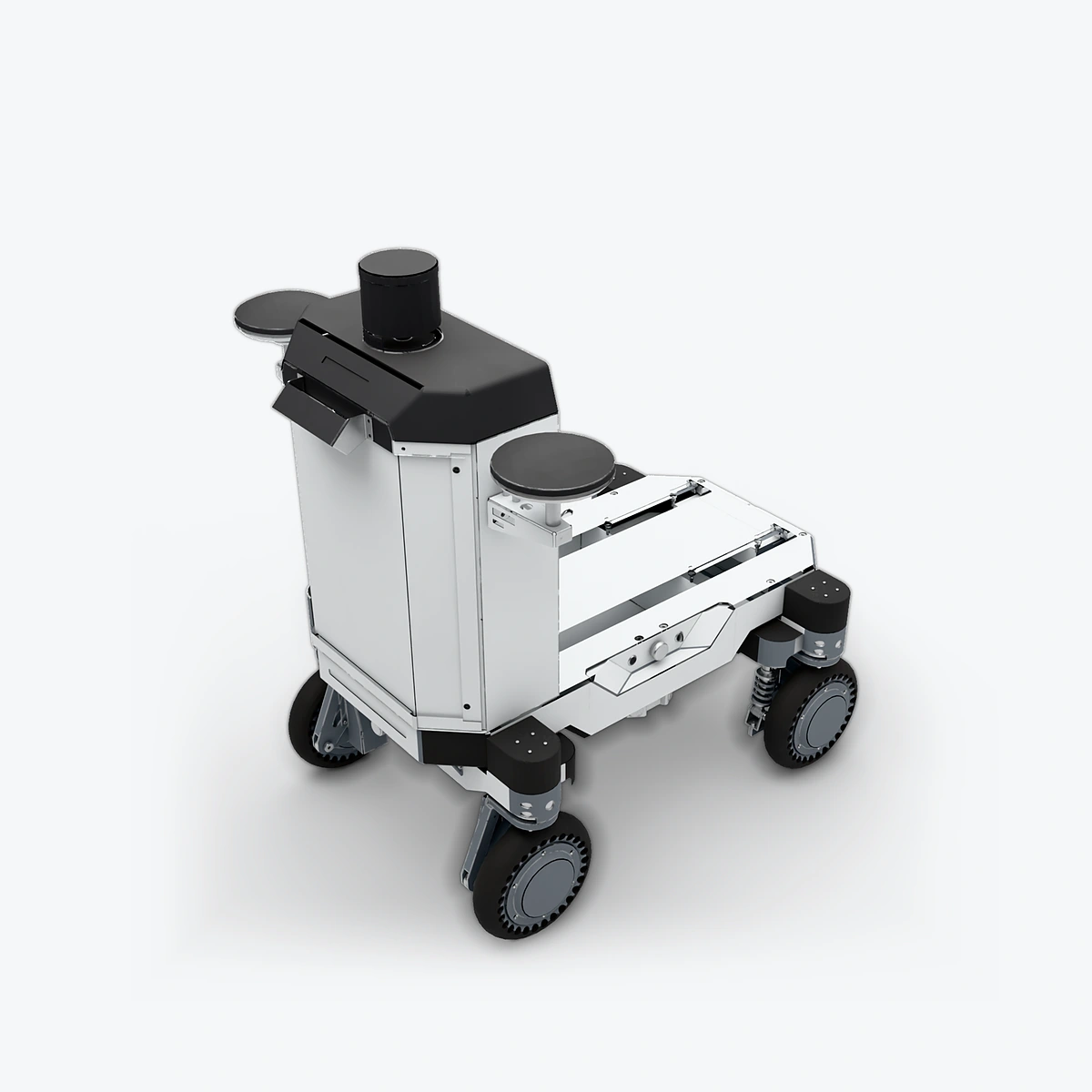
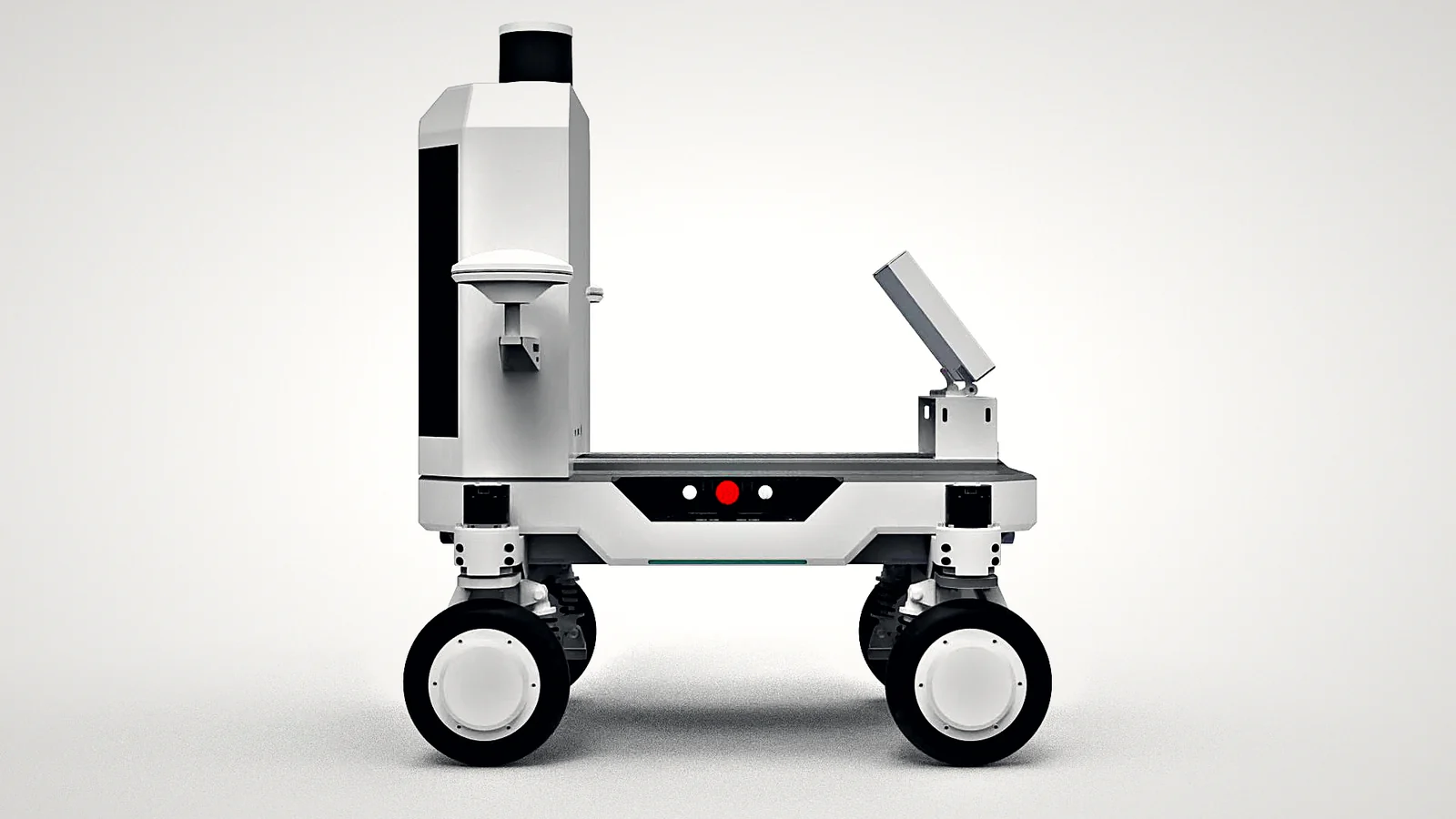
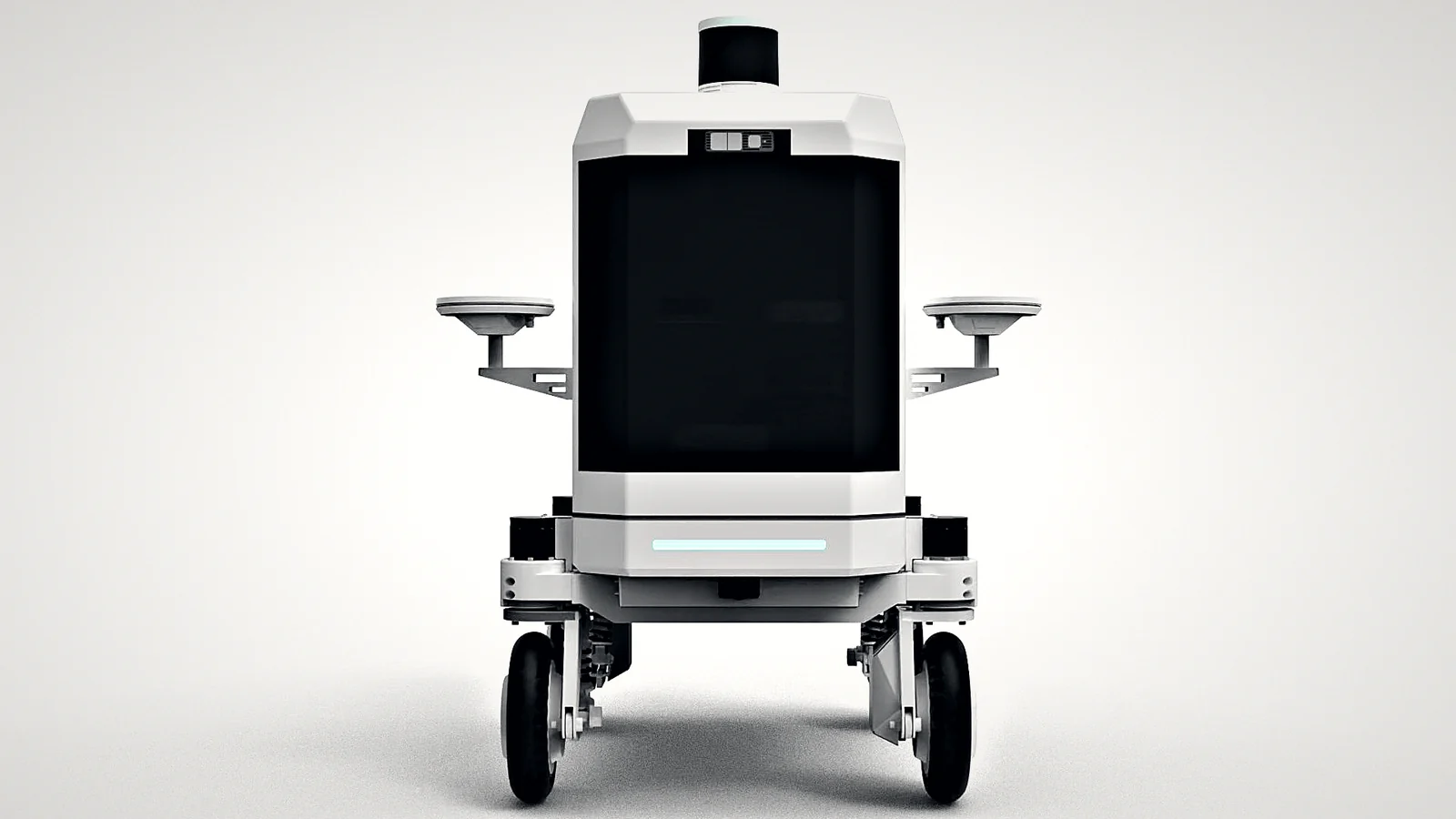
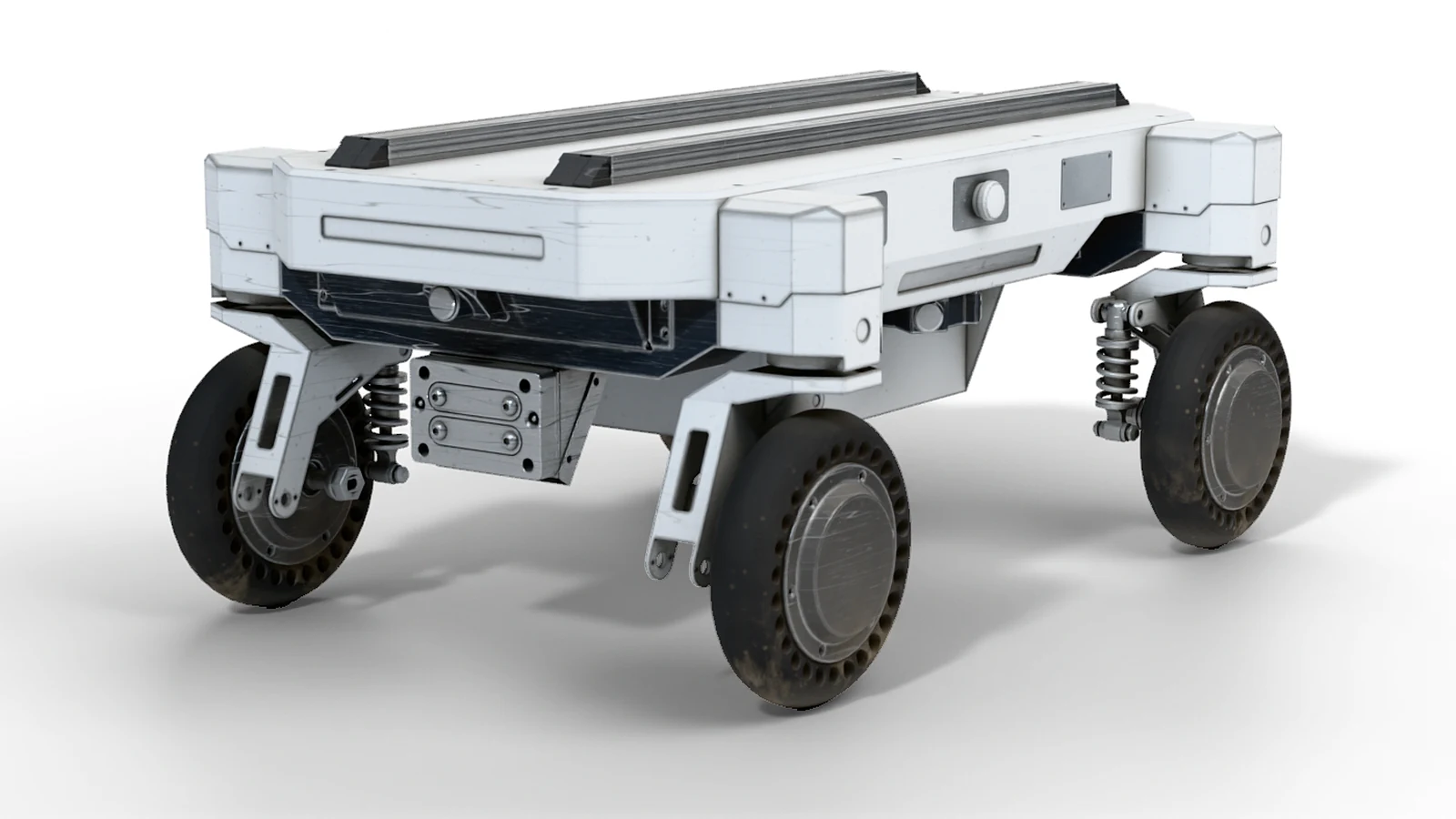
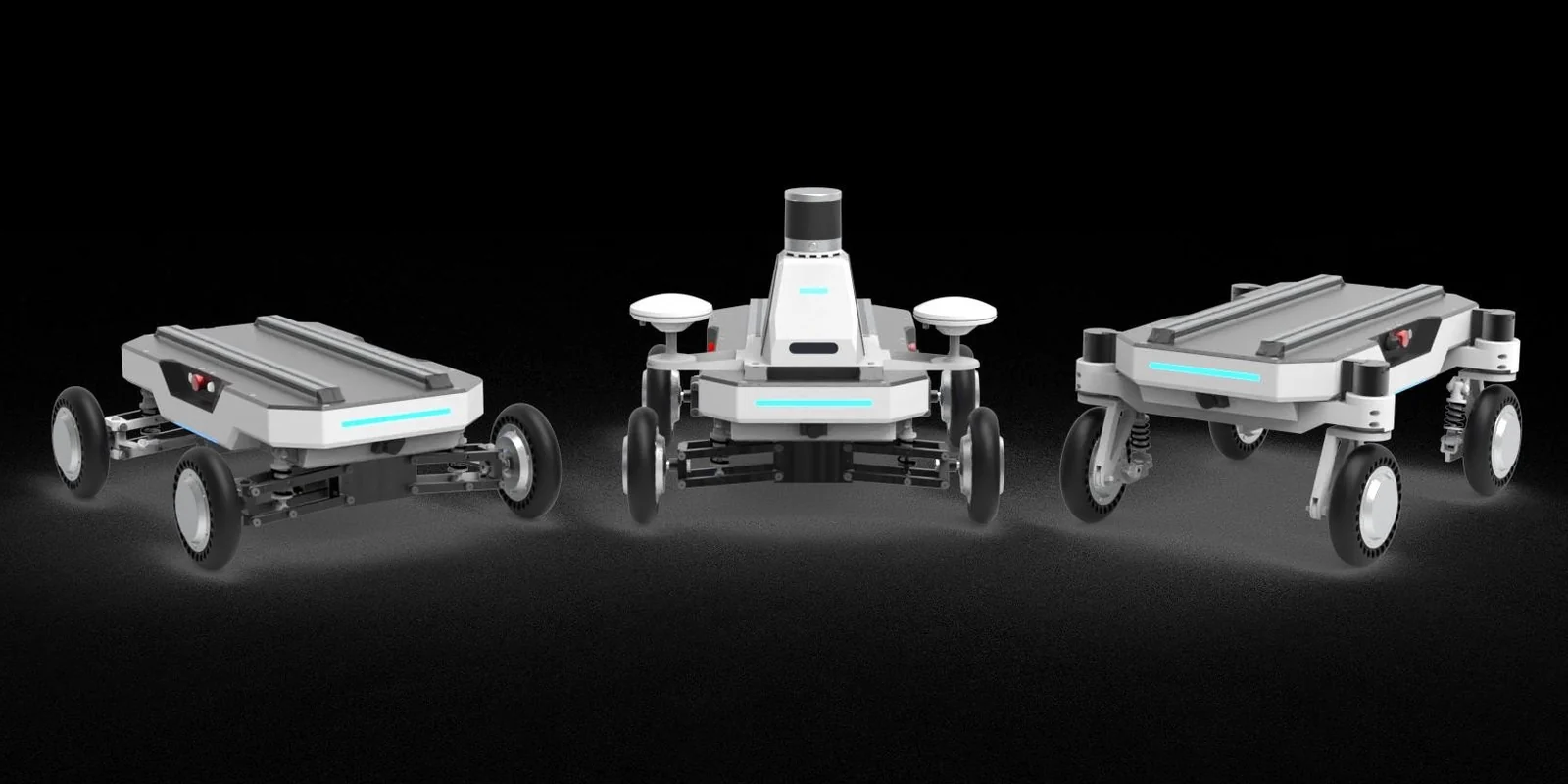
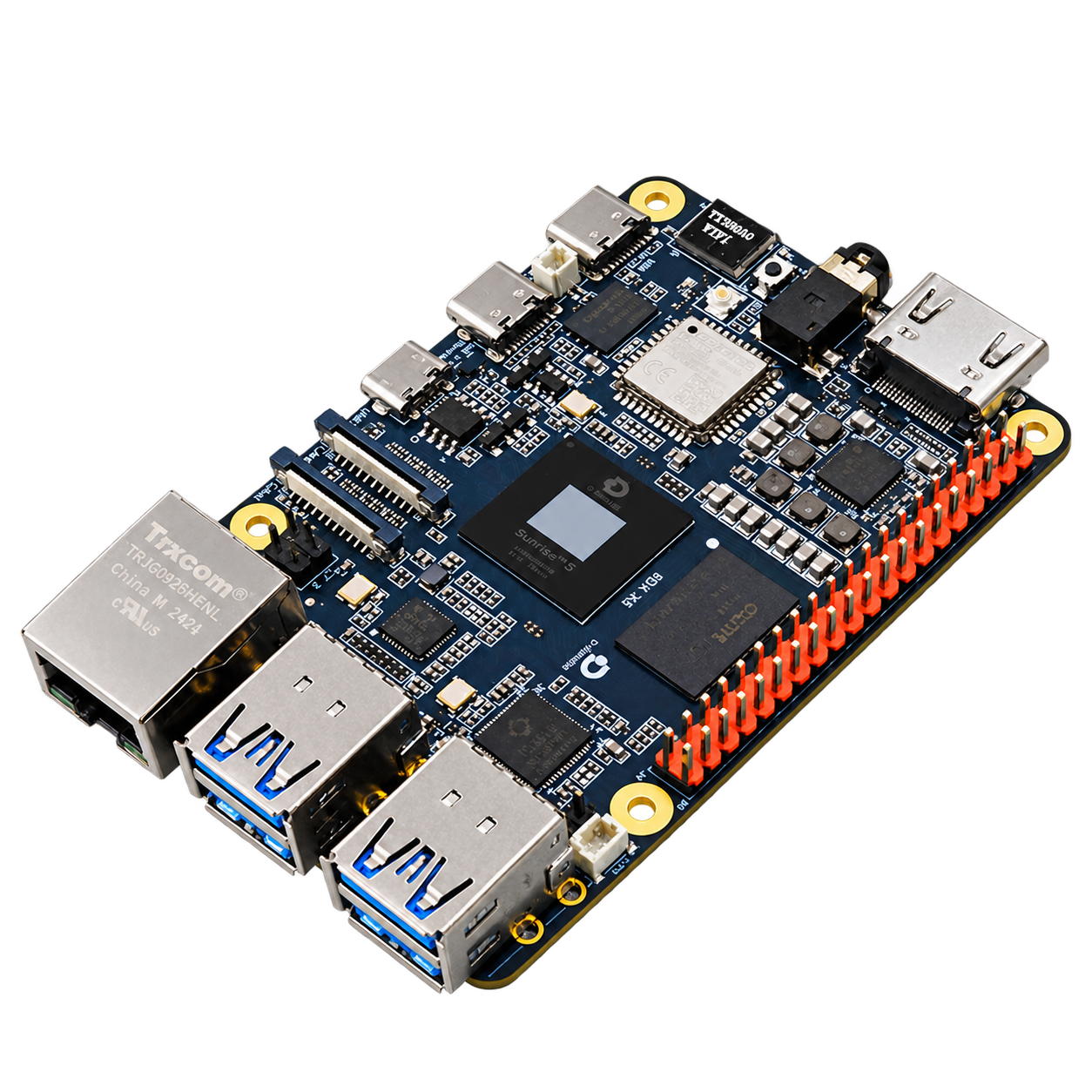
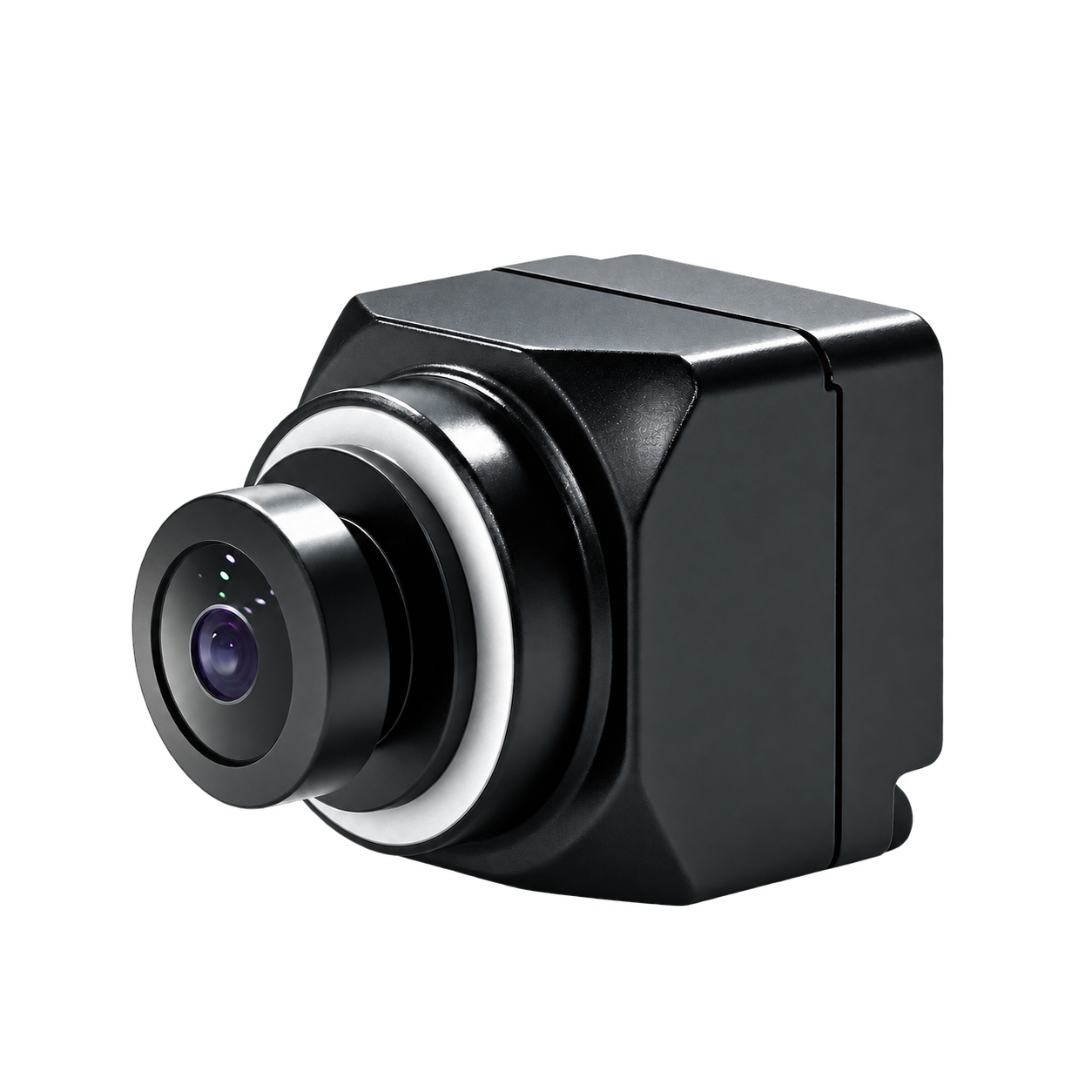
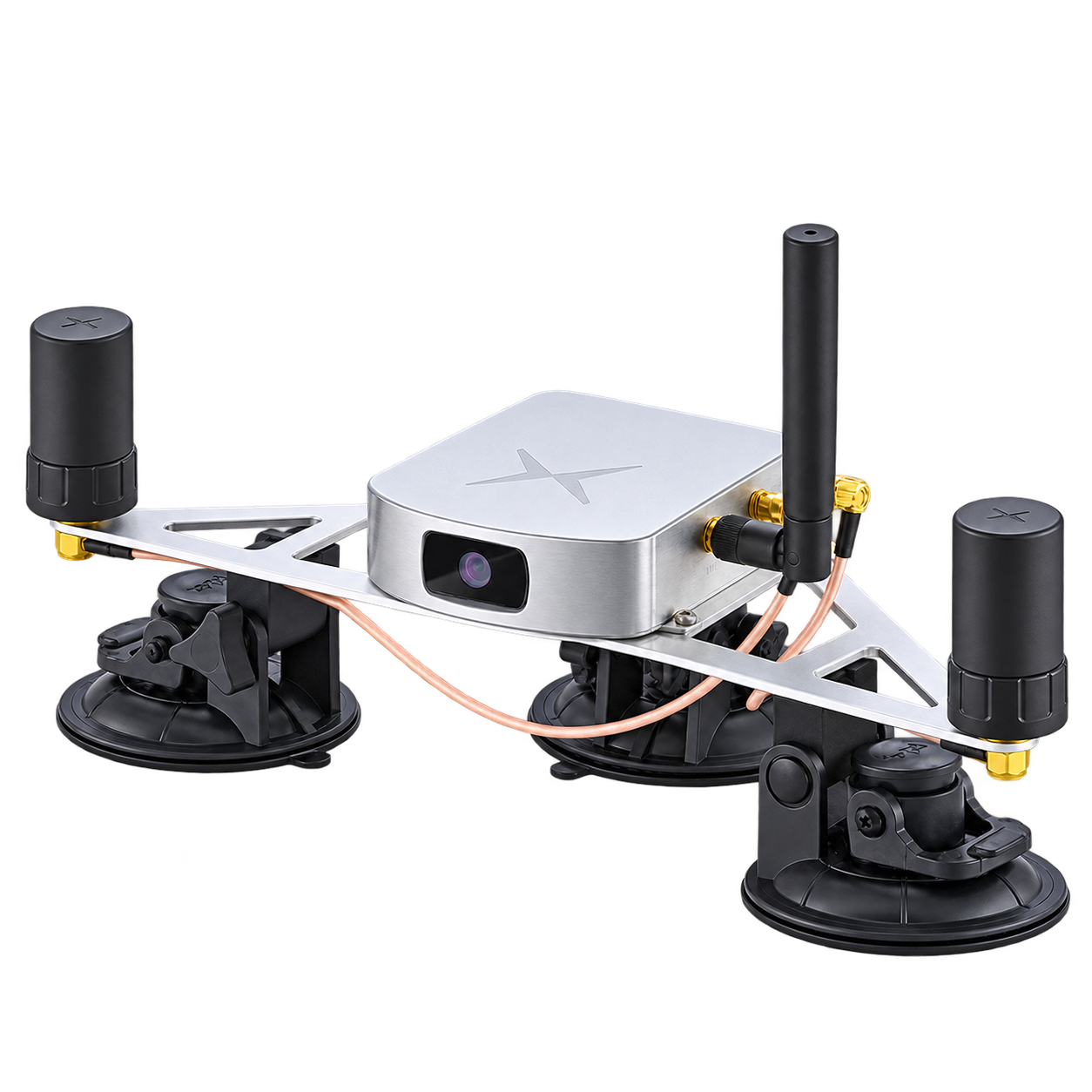
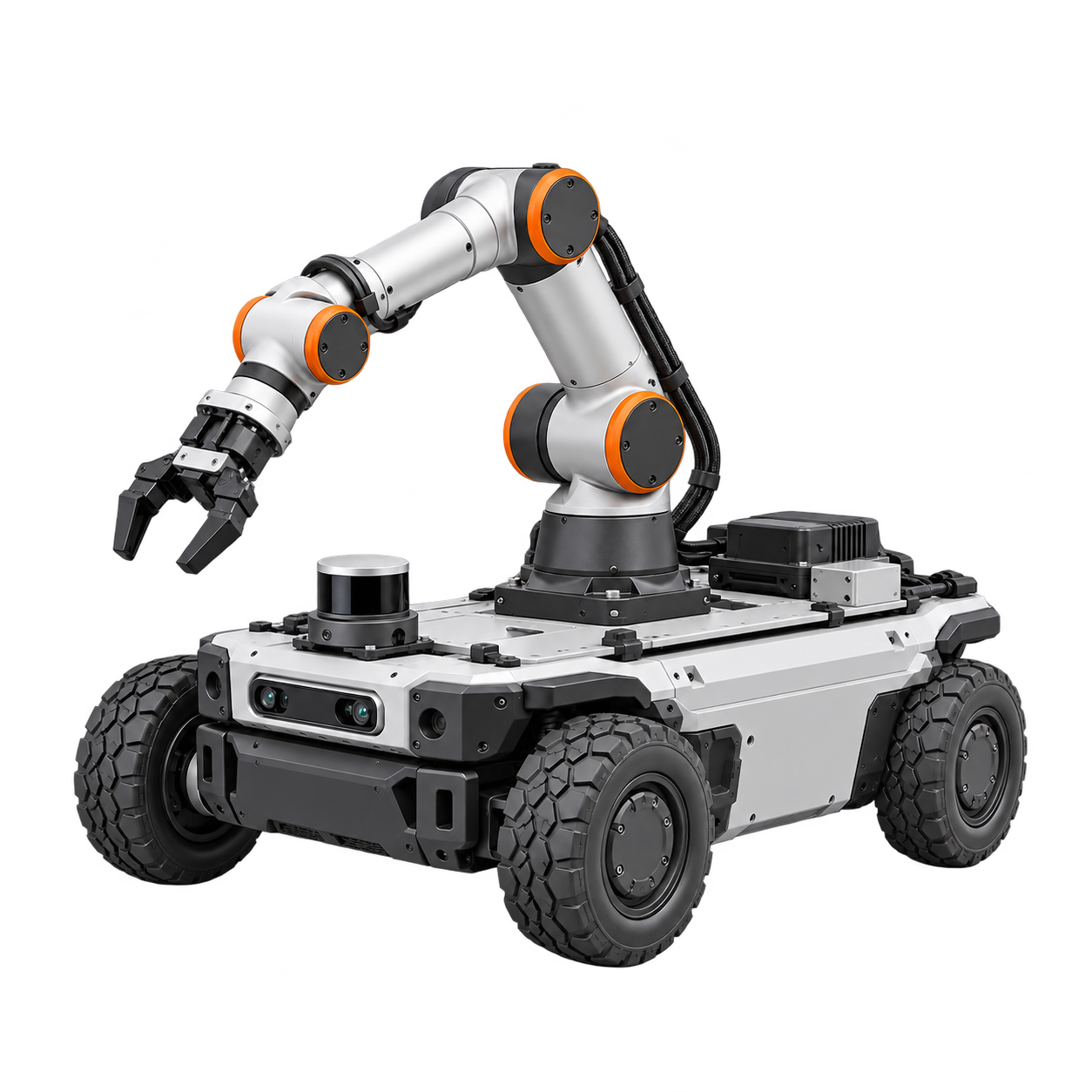
A compact mobile chassis for robot development: one chassis in four builds, skid-steer, front Ackermann, dual Ackermann and four-wheel steer. Start with chassis control and add compute, vision or positioning as the task grows.
One chassis, four builds: skid-steer, front Ackermann, dual Ackermann and four-wheel steer; A-4WS also travels sideways (crab)
80 kg max payload, up to 11.6 km/h, 15° max grade, up to 6 h runtime unloaded
CAN 2.0B and RS-485 / RS-232 control, ROS 2 / ROS 1 drivers, C++ SDK and DBC files
2 × 2040 top mounting rails and separate 48 V / 12 V payload power
Typical tasks
Mobile-robotics teaching and research
Chassis control and path-tracking development
Mobile carrier for vision and positioning algorithms
Indoor and outdoor light transport and inspection prototypes
What to consider
DF, FA, DA and 4WS are alternative builds: choose DF for pivot turns and the simplest control; FA or DA for car-like path tracking; 4WS for sideways travel or the smallest turning footprint.
Plan payload weight, center of gravity and mounting together; 80 kg max payload, 3–5 h runtime loaded.
Standard protection is IP33; for outdoor or damp conditions choose the IP54-sealed A-4WS.
Product videos
Luchs A product video · 0:50 Real driving: omnidirectional control, keeping pace with a jogger at 11.6 km/h, pivot turns; TerraAgent perception, positioning and mapping footage (English captions) Luchs A vertical reel · 0:59 60-second vertical cut: chassis motion and autonomy features (English captions)
Version and feature differences
Luchs A-DF
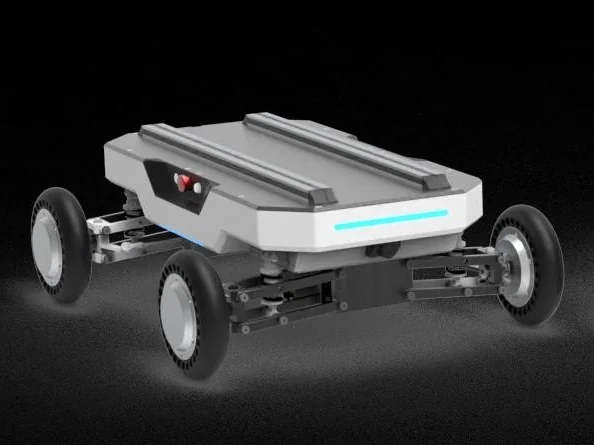
Product render
Steers by left/right wheel-speed difference, 0 m pivot radius; suited to skid-steer motion-model development.
Skid-steer motion model
Pivot turn
40 kg · 800 × 665 × 292 mm
Composition, compatibility and upgrades
Scope of this version
Luchs A-DF chassis
Double wishbones front and rear
One ultrasonic sensor front and rear
Operating conditions
Assess ground traction and steering resistance when selecting.
Upgrades and expansion
Keep the matching skid-steer vehicle parameters when adding perception and positioning components.
Luchs A-FA
Product render
Front Ackermann steering with 0.89 m minimum Ackermann radius, plus skid-steer pivot turns; suited to car-like path tracking and control development.
Skid-steer and Ackermann motion models
1 × 140 W steering servo
45 kg · 800 × 665 × 292 mm
Composition, compatibility and upgrades
Scope of this version
Luchs A-FA chassis
Double wishbones front and rear
One ultrasonic sensor front and rear
Operating conditions
Route planning must account for the turning radius.
Upgrades and expansion
The perception and navigation stack must use the matching wheelbase and steering parameters.
Luchs A-DA
Product render
Both axles steer, 0.445 m minimum dual-Ackermann radius; suited to multi-axle steering and maneuverability research.
Skid-steer, Ackermann and dual-Ackermann motion models
1 × 140 W steering servo
50 kg · 800 × 665 × 292 mm
Composition, compatibility and upgrades
Scope of this version
Luchs A-DA chassis
Double wishbones front and rear
One ultrasonic sensor front and rear
Operating conditions
Control software must match the front/rear axle steering relationship.
Upgrades and expansion
Vision and positioning components can be added for the task; check mounting conditions for each build.
Luchs A-4WS
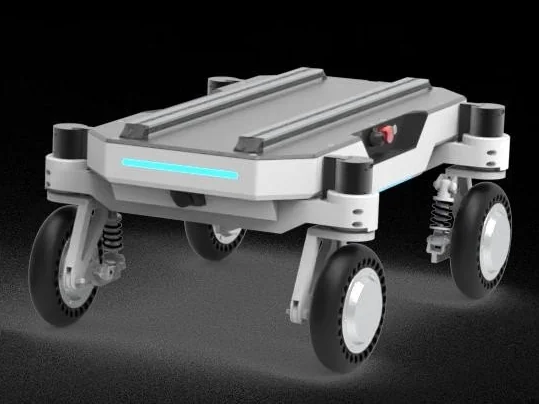
Product render
Independent four-wheel steering with pivot turns and sideways (crab) travel, 0.857 m pivot clearance circle: the most flexible base for robot motion research.
Skid-steer, Ackermann, dual-Ackermann and four-wheel-steer motion models
4 × 140 W steering servos, independent swing-arm suspension
55 kg · 800 × 580 × 372 mm; IP54-sealed build available
Composition, compatibility and upgrades
Scope of this version
Luchs A-4WS chassis
6 ultrasonic sensors (1 front, 1 rear, 2 per side)
3D model
Operating conditions
Per-wheel steering range depends on the selected control configuration.
Upgrades and expansion
Before adding autonomous navigation, match wheel-end feedback to the motion model.
Choose a build; mounting and accessory needs can be added to your inquiry.
Specifications & Interfaces
Switches the displayed specifications only. Purchase and inquiry configurations are selected separately.
Key specifications
Platform type
4 builds
Conditions
A-DF / A-FA / A-DA / A-4WS
Payload
80 kg
Speed
11.6 km/h
Conditions
Actual performance depends on operating conditions
Climbing angle
15°
Endurance & Battery
Up to 6 h unloaded; 3–5 h loaded
Minimum turning radius
A-DF · 0 m (pivot turn)
A-FA · pivot turn 0 m; Ackermann 0.89 m
A-DA · pivot turn 0 m; Dual Ackermann 0.445 m
A-4WS · 0 m
Battery configuration
LiFePO4,48 V / 15 Ah(720 Wh)
Control and communication
CAN: Luchs A CAN Protocol v1.1, CAN 2.0B, 1 Mbit/s, big-endian
Serial: RS-485 / RS-232
Conditions
Speed, yaw-rate and steering commands
Odometry-grade feedback
Dimensions & Weight
Dimensions: A-DF · 800 × 665 × 292 mm
A-FA · 800 × 665 × 292 mm
A-DA · 800 × 665 × 292 mm
A-4WS · 800 × 580 × 372 mm
Weight: A-DF · 40 kg
A-FA · 45 kg
A-DA · 50 kg
A-4WS · 55 kg
Conditions
L × W × H
Operating environment
Temperature: −10 °C–+45 °C
Protection: IP33; A-4WS IP54-sealed build available
Conditions
The IP54-sealed build is available for the A-4WS only
Other power & installation specifications
Other power & installation specifications
Payload power supply
48 V / 10 A × 1;12 V / 8 A × 1
Mounting interface
2 × 2040 aluminum profile; 700 mm long, 200 mm center-to-center
Operating modes: remote control · automatic · maintenance
Remote control: 10-channel 2.4 GHz transmitter and receiver, included
What's included
Luchs A in the ordered build; remote control; charger; user manual, data sheet, CAN and serial protocols with DBC, ROS 2 / ROS 1 software and robot model; 3D model (A-4WS)
Conditions
Warranty as set out in the sales contract
Excludes normal wear, consumables and damage from misuse, accident or unauthorized modification
System & software scope
ROS 2 (Humble, Jazzy) and ROS 1 (Noetic) drivers, C++ SDK, robot model, simulator, DBC files
Conditions
One code base for the Luchs family
Wheelbase / track / wheel diameter
Wheelbase: 594 mm
Wheel diameter: 206 mm
A-DF · Track: 596 mm
A-FA · Track: 596 mm
A-DA · Track: 596 mm
A-4WS · Track: 500 mm
Frame and suspension
Frame: carbon steel and aluminum alloy
A-DF · Suspension: double wishbone front and rear
A-FA · Suspension: double wishbone front and rear
A-DA · Suspension: double wishbone front and rear
A-4WS · Suspension: independent swing arm
Charging
Charger: 48 V / 10 A, included
Charging time: 0–100% approx. 2 h
Charging interlock: drive disabled while the charger is connected
Emergency stop, parking and protection
Emergency stop: one button on each side; remote-control e-stop
Protection: power-on self-test and fault warning, BMS, ultrasonic collision stop, output over-current protection
Parking brake: motor lock
Operating modes: remote control · automatic · maintenance
Remote control: 10-channel 2.4 GHz transmitter and receiver, included
What's included
Luchs A in the ordered build; remote control; charger; user manual, data sheet, CAN and serial protocols with DBC, ROS 2 / ROS 1 software and robot model; 3D model (A-4WS)
Conditions
Warranty as set out in the sales contract
Excludes normal wear, consumables and damage from misuse, accident or unauthorized modification
System & software scope
ROS 2 (Humble, Jazzy) and ROS 1 (Noetic) drivers, C++ SDK, robot model, simulator, DBC files
Conditions
One code base for the Luchs family
Wheelbase / track / wheel diameter
Wheelbase: 594 mm
Wheel diameter: 206 mm
Track: 596 mm
Frame and suspension
Frame: carbon steel and aluminum alloy
Suspension: double wishbone front and rear
Charging
Charger: 48 V / 10 A, included
Charging time: 0–100% approx. 2 h
Charging interlock: drive disabled while the charger is connected
Emergency stop, parking and protection
Emergency stop: one button on each side; remote-control e-stop
Protection: power-on self-test and fault warning, BMS, ultrasonic collision stop, output over-current protection
Parking brake: motor lock
Ultrasonic sensors
2 (front, rear)
Lights
Status lights, breathing light, warning lights, charge-progress bar
Key specifications
Platform type
4 builds
Conditions
A-DF / A-FA / A-DA / A-4WS
Payload
80 kg
Speed
11.6 km/h
Conditions
Actual performance depends on operating conditions
Climbing angle
15°
Endurance & Battery
Up to 6 h unloaded; 3–5 h loaded
Minimum turning radius
pivot turn 0 m; Ackermann 0.89 m
Battery configuration
LiFePO4,48 V / 15 Ah(720 Wh)
Control and communication
CAN: Luchs A CAN Protocol v1.1, CAN 2.0B, 1 Mbit/s, big-endian
Serial: RS-485 / RS-232
Conditions
Speed, yaw-rate and steering commands
Odometry-grade feedback
Dimensions & Weight
Dimensions: 800 × 665 × 292 mm
Weight: 45 kg
Conditions
L × W × H
Operating environment
Temperature: −10 °C–+45 °C
Protection: IP33; A-4WS IP54-sealed build available
Conditions
The IP54-sealed build is available for the A-4WS only
Other power & installation specifications
Other power & installation specifications
Payload power supply
48 V / 10 A × 1;12 V / 8 A × 1
Mounting interface
2 × 2040 aluminum profile; 700 mm long, 200 mm center-to-center
Other interfaces & features
Other interfaces & features
Ground clearance
77 mm
Motion models and special maneuvers
Motion model: skid-steer, Ackermann
Special maneuvers: Pivot turn
Pivot clearance circle
1.01 m
Drive and steering motors
Drive motors: 4 × 250 W servo hub motors
Steering motors: 1 × 140 W servo
Operating modes and remote control
Operating modes: remote control · automatic · maintenance
Remote control: 10-channel 2.4 GHz transmitter and receiver, included
What's included
Luchs A in the ordered build; remote control; charger; user manual, data sheet, CAN and serial protocols with DBC, ROS 2 / ROS 1 software and robot model; 3D model (A-4WS)
Conditions
Warranty as set out in the sales contract
Excludes normal wear, consumables and damage from misuse, accident or unauthorized modification
System & software scope
ROS 2 (Humble, Jazzy) and ROS 1 (Noetic) drivers, C++ SDK, robot model, simulator, DBC files
Conditions
One code base for the Luchs family
Wheelbase / track / wheel diameter
Wheelbase: 594 mm
Wheel diameter: 206 mm
Track: 596 mm
Frame and suspension
Frame: carbon steel and aluminum alloy
Suspension: double wishbone front and rear
Charging
Charger: 48 V / 10 A, included
Charging time: 0–100% approx. 2 h
Charging interlock: drive disabled while the charger is connected
Emergency stop, parking and protection
Emergency stop: one button on each side; remote-control e-stop
Protection: power-on self-test and fault warning, BMS, ultrasonic collision stop, output over-current protection
Parking brake: motor lock
Ultrasonic sensors
2 (front, rear)
Lights
Status lights, breathing light, warning lights, charge-progress bar
Key specifications
Platform type
4 builds
Conditions
A-DF / A-FA / A-DA / A-4WS
Payload
80 kg
Speed
11.6 km/h
Conditions
Actual performance depends on operating conditions
Climbing angle
15°
Endurance & Battery
Up to 6 h unloaded; 3–5 h loaded
Minimum turning radius
pivot turn 0 m; Dual Ackermann 0.445 m
Battery configuration
LiFePO4,48 V / 15 Ah(720 Wh)
Control and communication
CAN: Luchs A CAN Protocol v1.1, CAN 2.0B, 1 Mbit/s, big-endian
Serial: RS-485 / RS-232
Conditions
Speed, yaw-rate and steering commands
Odometry-grade feedback
Dimensions & Weight
Dimensions: 800 × 665 × 292 mm
Weight: 50 kg
Conditions
L × W × H
Operating environment
Temperature: −10 °C–+45 °C
Protection: IP33; A-4WS IP54-sealed build available
Conditions
The IP54-sealed build is available for the A-4WS only
Other power & installation specifications
Other power & installation specifications
Payload power supply
48 V / 10 A × 1;12 V / 8 A × 1
Mounting interface
2 × 2040 aluminum profile; 700 mm long, 200 mm center-to-center
Other interfaces & features
Other interfaces & features
Ground clearance
77 mm
Motion models and special maneuvers
Motion model: skid-steer, Ackermann, Dual Ackermann
Special maneuvers: Pivot turn
Pivot clearance circle
1.01 m
Drive and steering motors
Drive motors: 4 × 250 W servo hub motors
Steering motors: 1 × 140 W servo
Operating modes and remote control
Operating modes: remote control · automatic · maintenance
Remote control: 10-channel 2.4 GHz transmitter and receiver, included
What's included
Luchs A in the ordered build; remote control; charger; user manual, data sheet, CAN and serial protocols with DBC, ROS 2 / ROS 1 software and robot model; 3D model (A-4WS)
Conditions
Warranty as set out in the sales contract
Excludes normal wear, consumables and damage from misuse, accident or unauthorized modification
System & software scope
ROS 2 (Humble, Jazzy) and ROS 1 (Noetic) drivers, C++ SDK, robot model, simulator, DBC files
Conditions
One code base for the Luchs family
Wheelbase / track / wheel diameter
Wheelbase: 594 mm
Wheel diameter: 206 mm
Track: 596 mm
Frame and suspension
Frame: carbon steel and aluminum alloy
Suspension: double wishbone front and rear
Charging
Charger: 48 V / 10 A, included
Charging time: 0–100% approx. 2 h
Charging interlock: drive disabled while the charger is connected
Emergency stop, parking and protection
Emergency stop: one button on each side; remote-control e-stop
Protection: power-on self-test and fault warning, BMS, ultrasonic collision stop, output over-current protection
Parking brake: motor lock
Ultrasonic sensors
2 (front, rear)
Lights
Status lights, breathing light, warning lights, charge-progress bar
Key specifications
Platform type
4 builds
Conditions
A-DF / A-FA / A-DA / A-4WS
Payload
80 kg
Speed
11.6 km/h
Conditions
Actual performance depends on operating conditions
Climbing angle
15°
Endurance & Battery
Up to 6 h unloaded; 3–5 h loaded
Minimum turning radius
0 m
Battery configuration
LiFePO4,48 V / 15 Ah(720 Wh)
Control and communication
CAN: Luchs A CAN Protocol v1.1, CAN 2.0B, 1 Mbit/s, big-endian
Serial: RS-485 / RS-232
Conditions
Speed, yaw-rate and steering commands
Odometry-grade feedback
Dimensions & Weight
Dimensions: 800 × 580 × 372 mm
Weight: 55 kg
Conditions
L × W × H
Operating environment
Temperature: −10 °C–+45 °C
Protection: IP33; A-4WS IP54-sealed build available
Conditions
The IP54-sealed build is available for the A-4WS only
Other power & installation specifications
Other power & installation specifications
Payload power supply
48 V / 10 A × 1;12 V / 8 A × 1
Mounting interface
2 × 2040 aluminum profile; 700 mm long, 200 mm center-to-center
Drive motors: 4 × 250 W servo hub motors
Steering motors: 4 × 140 W servo
Operating modes and remote control
Operating modes: remote control · automatic · maintenance
Remote control: 10-channel 2.4 GHz transmitter and receiver, included
What's included
Luchs A in the ordered build; remote control; charger; user manual, data sheet, CAN and serial protocols with DBC, ROS 2 / ROS 1 software and robot model; 3D model (A-4WS)
Conditions
Warranty as set out in the sales contract
Excludes normal wear, consumables and damage from misuse, accident or unauthorized modification
System & software scope
ROS 2 (Humble, Jazzy) and ROS 1 (Noetic) drivers, C++ SDK, robot model, simulator, DBC files
Conditions
One code base for the Luchs family
Wheelbase / track / wheel diameter
Wheelbase: 594 mm
Wheel diameter: 206 mm
Track: 500 mm
Frame and suspension
Frame: carbon steel and aluminum alloy
Suspension: independent swing arm
Charging
Charger: 48 V / 10 A, included
Charging time: 0–100% approx. 2 h
Charging interlock: drive disabled while the charger is connected
Emergency stop, parking and protection
Emergency stop: one button on each side; remote-control e-stop
Protection: power-on self-test and fault warning, BMS, ultrasonic collision stop, output over-current protection
Parking brake: motor lock
Ultrasonic sensors
6 (1 front, 1 rear, 2 per side)
Lights
Status lights, breathing light, warning lights, charge-progress bar
Components & Accessories
Product & configuration scope
Luchs A chassis in the ordered build
10-channel 2.4 GHz transmitter and receiver
48 V / 10 A charger (0–100 % in about 2 h)
User manual, data sheet, CAN and serial protocols with DBC files
ROS 2 / ROS 1 drivers, C++ SDK and robot model; 3D model with the A-4WS
Accessory selection
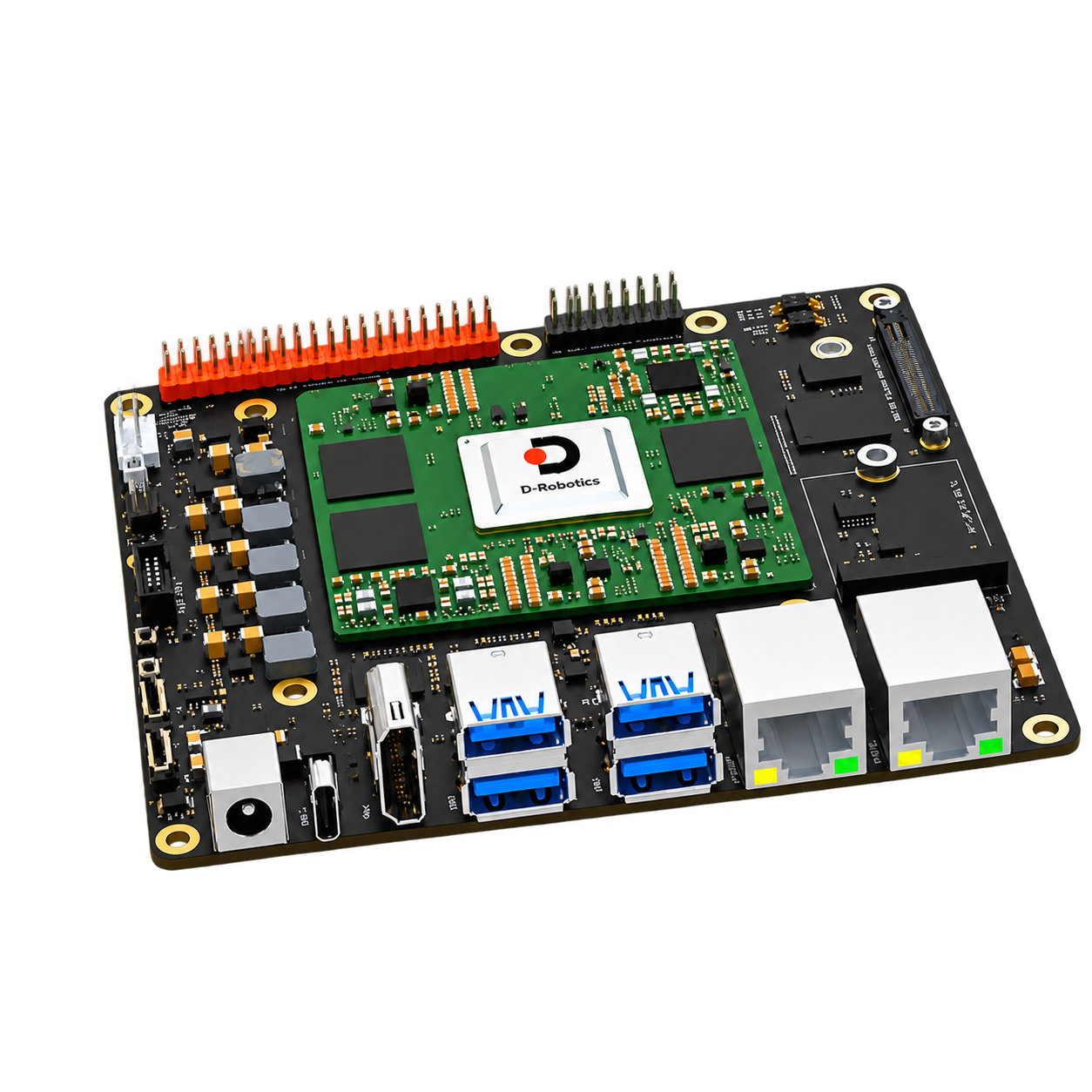
Development PC or RDK compute unit, with CAN or serial connection
Payload mounting plate, wiring harness and power conversion
Cameras or positioning modules for the task
Included items, options, wiring harnesses and mounting hardware are confirmed according to the selected model and system configuration.
Software and usage support
ROS 2 (Humble, Jazzy) and ROS 1 (Noetic) drivers, one code base for the Luchs family.
CAN protocol, ROS driver and vehicle parameters must match the chassis build.
Read the chassis status first, then move on to low-speed control and integration testing with higher-level algorithms.
Navigation software and perception/positioning components are selected separately as part of the system configuration.
Operating conditions
The standard build is IP33: operate and charge in dry conditions per the manual. For outdoor or damp use choose the IP54-sealed A-4WS and assess the complete configuration.
Driving is disabled while the charger is connected.
Before use, check both emergency-stop buttons, the remote e-stop and the site; start software tests at low speed in a safe area.